
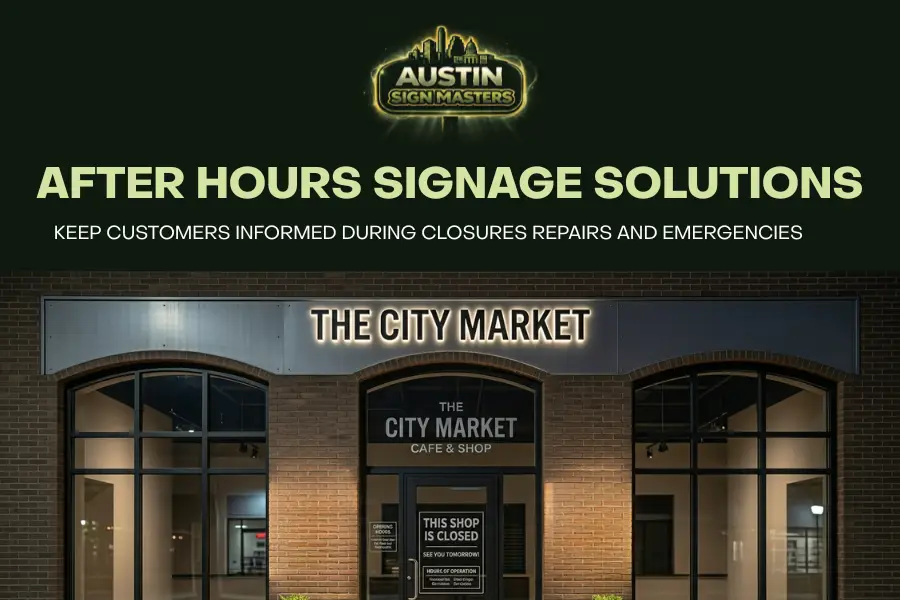
Unexpected closures, repairs, emergencies, and after-hours operations are situations that almost every business experiences at some point. During these moments, communication becomes critical because customers still arrive expecting normal operations. Without clear direction, confusion quickly turns into frustration, making after hours signage solutions essential for keeping customers informed and maintaining a professional experience.
This is where after-hours signage solutions become essential. Temporary business signs help customers understand what is happening, where they should go, and when they can expect normal operations to resume. Whether a business is closed for maintenance, experiencing a power outage, or redirecting visitors during repairs, the right signage helps maintain professionalism and trust.
Clear communication through business closure signage also improves safety, reduces unnecessary interruptions, and ensures that customers feel informed rather than ignored. Even during disruptions, professional signage shows that the business is organized, prepared, and actively managing the situation.
Businesses looking for reliable temporary signage solutions can work with Austin Sign Masters for custom signage designed for urgent and after-hours communication needs.
This guide explains how after hours signage solutions support communication, safety, customer experience, and brand reputation while helping businesses stay professional during temporary disruptions.
What Are After Hours Signage Solutions
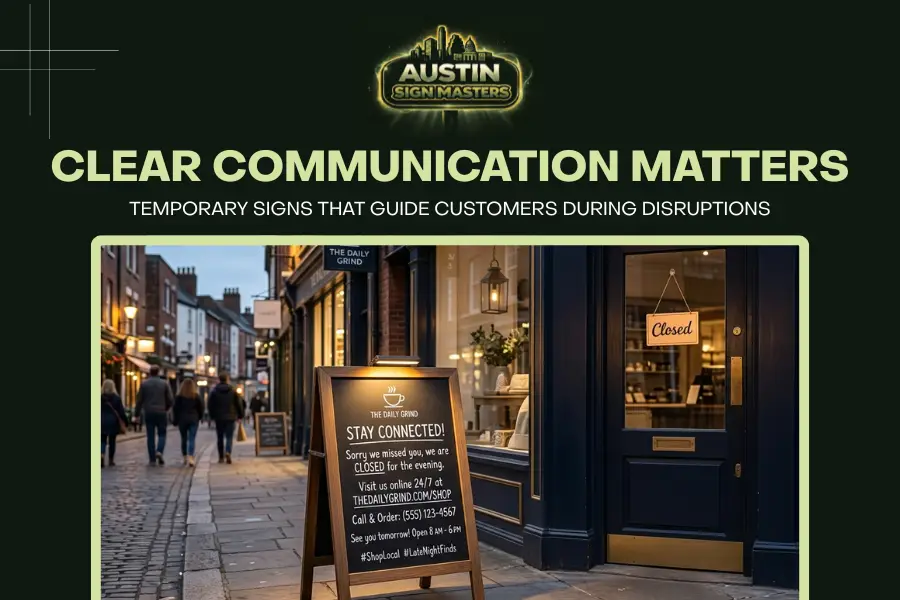
After hours signage solutions are temporary signs used when a business is closed, operating under limited hours, undergoing repairs, or managing an emergency situation. These signs are designed to quickly communicate important information to customers, employees, delivery drivers, or visitors.
Unlike permanent signs, temporary business signs are flexible and can be updated or replaced based on changing conditions. Their primary purpose is to reduce confusion and provide clear direction during unexpected or temporary disruptions.
These signs may be placed in several locations depending on the situation, including:
Main Entrances and Doors
These are the first places customers look when arriving at a business. Signs placed here immediately explain closures, schedule changes, or alternate instructions.
Windows and Glass Storefronts
Large visible areas allow businesses to communicate messages clearly to approaching visitors and passing foot traffic. Businesses already using professional storefront signage often maintain stronger visibility during temporary disruptions.
Parking Lots and Walkways
Directional signs for businesses help guide visitors safely toward alternate entrances or pickup areas.
Reception Areas and Hallways
Indoor temporary signs help redirect movement during repairs, maintenance, or restricted access situations.
Whether used for planned maintenance or emergency signage situations, these signs help businesses stay organized and maintain clear communication even when operations change unexpectedly.
Why After-Hours Signage Matters
Customers become frustrated when they arrive at a closed or restricted business without explanation. A locked door with no communication creates confusion and leaves customers unsure about what happened, whether the business is still operating, or where they should go next.
After hours signage solutions prevent these misunderstandings by providing immediate clarity. Instead of creating uncertainty, businesses can guide customers calmly and professionally through temporary disruptions.
Benefits of Clear Temporary Signage
Improves Customer Experience
Customers appreciate clear communication, especially during unexpected situations. Informative closure signs for businesses reduce frustration and help people understand what to expect.
Maintains Professionalism
Organized signage makes a business appear prepared and reliable, even during emergencies or repairs.
Protects Customer Trust
When businesses continue communicating clearly during disruptions, customers are more likely to remain loyal and return later.
Reduces Confusion and Interruptions
Signs answer common questions immediately, reducing unnecessary phone calls or customer complaints.
Supports Smoother Operations
Staff can focus on resolving the issue rather than repeatedly explaining the situation to arriving visitors.
Businesses wanting to improve long-term signage communication can review additional examples in the sign gallery.
Strong business communication signs help businesses remain approachable and professional even when normal operations are temporarily interrupted.
Common Situations That Need Temporary Signage
There are many situations where after hours signage solutions become necessary. Some are planned in advance, while others happen unexpectedly and require immediate communication.
Planned Maintenance or Repairs
Businesses often close temporarily for renovations, equipment upgrades, or facility repairs. Repair signs help explain the situation while guiding customers toward alternate entrances or future reopening information.
Unexpected Closures
Unexpected situations such as staffing shortages or emergency issues may require immediate closure. Temporary business signs help notify customers quickly and reduce confusion.
Weather-Related Disruptions
Storms, flooding, or severe weather conditions may force businesses to close early or operate with limited access. Emergency signage ensures visitors understand the situation safely.
Power Outages
Power failures often affect lighting, payment systems, and customer safety. Signs can communicate temporary closures or modified operations until systems are restored.
Emergency Safety Issues
Construction hazards, broken walkways, or restricted zones require safety signs for businesses to protect both visitors and employees.
Reduced Hours or After-Hours Operations
Businesses operating with modified schedules can use business closure signage to explain updated hours and direct customers appropriately.
Types of After-Hours Signs Businesses Can Use
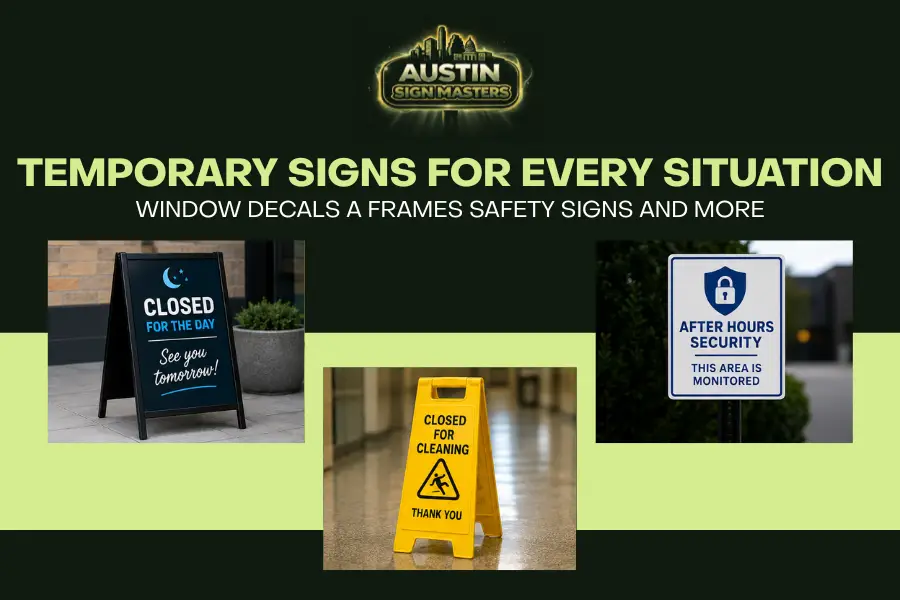
Different situations require different types of temporary signage. Choosing the right format improves visibility, communication, and customer understanding.
Window Decals
Window decals are highly visible and work well for storefront communication. They are useful for closure notices, updated business hours, or reopening announcements.
Door Hangers
Door hangers provide direct communication at entry points and are effective for explaining temporary closures or alternate access instructions.
A-Frame Signs
A-frame signs are portable and ideal for sidewalks, parking lots, or entry paths. They work well as directional signs for businesses during repairs or limited access situations.
Directional Signs
Directional signage helps guide customers toward alternate entrances, pickup zones, or temporary service areas during disruptions.
Printed Notices
Printed notices are quick solutions for short-term communication. However, professionally designed notices create a stronger impression than handwritten messages.
Barrier and Caution Signs
Safety signs for businesses help mark restricted areas, hazards, wet floors, or construction zones to prevent accidents and confusion.
Wayfinding Signs
Wayfinding signs direct movement clearly within buildings or outdoor areas, helping visitors navigate temporary changes efficiently.
Businesses can also visit the signage FAQs page for additional information about sign types and usage.
What Information the Sign Should Include
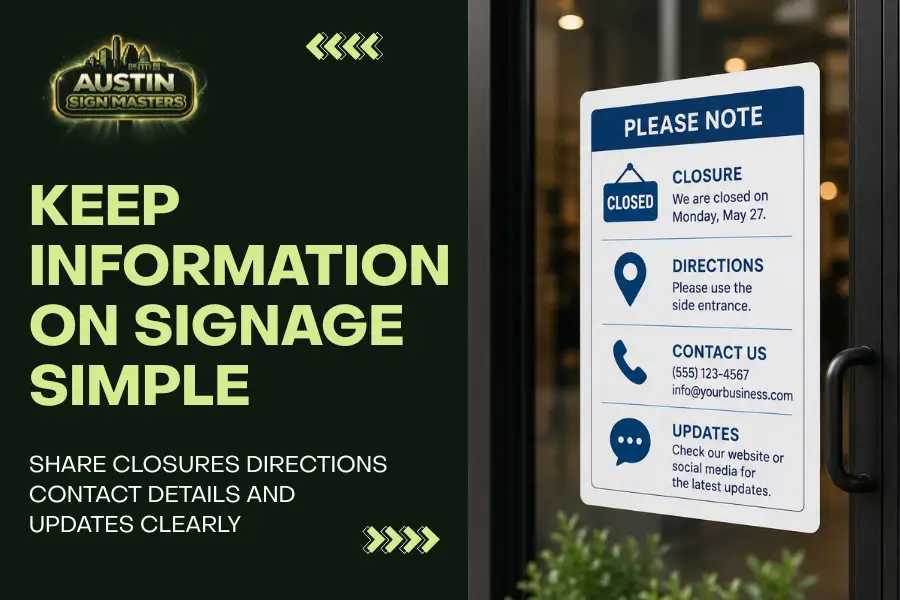
Effective after hours signage solutions must communicate information quickly and clearly. Customers should understand the message within seconds without needing additional explanation.
Reason for Closure or Limited Access
Customers should immediately know whether the closure is related to repairs, maintenance, weather conditions, or emergency situations. Clear explanations reduce uncertainty and frustration.
Expected Reopening Time
If known, businesses should provide estimated reopening details. This helps customers decide whether to wait, return later, or use alternate options.
Alternate Entrance or Route
Directional signs for businesses should clearly guide customers toward side entrances, pickup zones, or temporary access points.
Contact Information
Phone numbers, websites, QR codes, or social media details help customers stay informed during disruptions. Businesses can also direct visitors to the contact page for updated communication.
Safety Instructions
Emergency signage may need to include warnings about restricted areas, hazards, or temporary safety procedures.
Simple and Direct Wording
Messages should remain short, clear, and easy to understand. Overly detailed explanations can confuse customers instead of helping them.
Design Tips for Clear Communication
After-hours signs should be designed for immediate readability because customers often view them quickly while walking or driving.
Use Large Readable Fonts
Text should be visible from a distance and easy to understand within seconds.
Maintain Strong Contrast
Dark text on light backgrounds or light text on dark backgrounds improves visibility significantly.
Keep Messaging Short
Focus only on the most important information to avoid overwhelming customers.
Use Icons and Arrows When Helpful
Directional arrows, caution symbols, and visual indicators improve understanding quickly.
Avoid Cluttered Layouts
Too much information reduces readability and weakens communication effectiveness.
Professional design helps temporary business signs remain clear, organized, and easy to follow.
Safety and Compliance Considerations
Some situations require signs that do more than simply inform customers. Businesses may also need signage that supports safety and directs movement clearly.
Safety signs for businesses help prevent accidents by identifying hazards, blocked pathways, wet floors, restricted zones, or construction areas. These signs should always be placed where visitors naturally look before making decisions about where to walk or enter.
Visibility Matters
Signs should remain visible under different lighting conditions and weather situations.
Place Signs Near Decision Points
Customers should see instructions before reaching blocked areas or restricted access points.
Use Durable Materials
Outdoor emergency signage should withstand weather exposure without becoming unreadable or damaged.
Prevent Confusion During Emergencies
Clear directional signs reduce crowding, hesitation, and unsafe movement during urgent situations.
Proper placement and visibility ensure that after hours signage solutions improve both safety and customer experience.
Where to Place After-Hours Signs
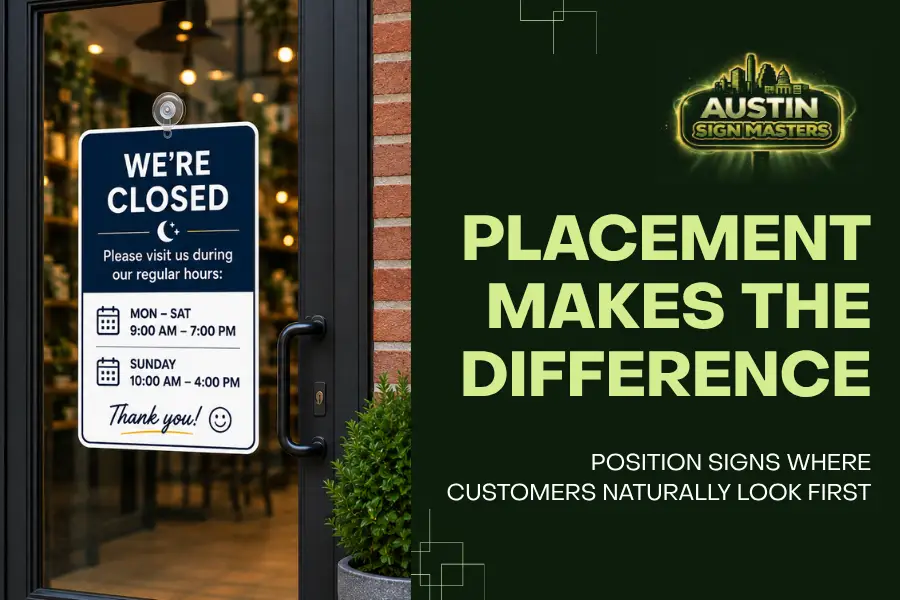
Placement has a major impact on how effective after hours signage solutions become. Even well-designed signs fail if customers do not see them in time.
Main Entrances
The primary entrance is the most important location because it is where customers first expect access.
Glass Doors and Windows
These highly visible surfaces help communicate information before customers attempt entry.
Parking Lots and Driveways
Signs placed here prepare visitors before they reach the building.
Side Entrances
Alternate access points should always include clear directional signage.
Hallways and Walkways
Indoor directional signs help guide movement safely around restricted areas.
Reception and Lobby Areas
Interior notices help visitors understand temporary access changes or updated procedures.
Street-Facing Areas
Visible signage facing traffic or pedestrians increases awareness before customers arrive directly at the entrance.
Businesses should always review signage placement from the customer’s point of view to ensure clarity.
How After-Hours Signage Protects Brand Reputation

Even temporary disruptions affect how customers view a business. Poor communication during closures can make businesses appear disorganized or unprepared.
Professional after hours signage solutions protect brand reputation by showing that the business is actively managing the situation and communicating clearly. Customers appreciate businesses that respect their time and provide helpful information during disruptions.
Builds Customer Confidence
Clear signage reassures customers that the business remains organized and operational.
Shows Professionalism
Clean, branded temporary signs appear far more trustworthy than handwritten notices.
Reduces Negative Experiences
Customers are less likely to become frustrated when they understand the reason behind disruptions.
Maintains Brand Consistency
Using custom temporary signage with business branding keeps communication visually professional.
Even during emergencies or repairs, strong signage helps maintain a positive customer impression.
Best Practices for Businesses
Businesses can improve emergency communication by preparing signage systems in advance instead of reacting during stressful situations.
Keep Templates Ready
Reusable templates allow businesses to respond quickly to common situations.
Update Signs Immediately
Outdated information creates confusion, so signage should reflect current conditions at all times.
Maintain Consistent Branding
Using logos, colors, and brand styles helps temporary signs appear more professional.
Replace Damaged Signs Quickly
Faded or damaged signs reduce visibility and negatively affect customer perception.
Review Visibility Regularly
Businesses should test signage placement from a customer’s perspective to ensure readability.
Preparation allows businesses to respond faster while maintaining a more organized appearance.
Industry Examples
Different industries use after hours signage solutions in different ways depending on customer flow and operational needs.
Restaurants
Restaurants often use closure notices, alternate pickup instructions, and temporary ordering signs during repairs or limited hours.
Retail Stores
Retail businesses use reopening notices, repair signs, and directional signage during renovations or inventory work.
Medical Clinics
Clinics use appointment-direction signs and emergency closure signage to guide patients safely.
Office Buildings
Office spaces use temporary entry signs and restricted-area notices during construction or maintenance projects.
Service Businesses
Mobile or appointment-based businesses often use roadside signs or temporary notices for limited access situations.
Why Professional Signage Makes a Difference
Professionally designed temporary business signs create a much stronger impression than handwritten or rushed notices. They appear more trustworthy, easier to read, and more aligned with the business brand.
Improves Readability
Professional layouts make information easier to understand quickly.
Enhances Brand Image
Custom temporary signage maintains a polished and consistent appearance.
Supports Faster Communication
Well-designed signs communicate essential information immediately without confusion.
Provides Better Durability
Professional materials last longer and remain readable in different environments.
Businesses needing urgent temporary signage can request a signage quote for fast turnaround support.
Custom signage solutions help businesses remain professional even during unexpected disruptions.
How Austin Sign Masters Can Help
At Austin Sign Masters, we create clear, durable, and professional after hours signage solutions for businesses managing closures, repairs, emergencies, and temporary access changes.
Custom Temporary Signage
We design temporary business signs tailored to your exact operational needs and branding.
Emergency Signage Solutions
Fast turnaround helps businesses respond quickly during urgent situations.
Directional and Safety Signs
We provide clear directional signs for businesses and safety signage for restricted areas.
Professional Design Support
Our team ensures signs remain readable, effective, and visually professional.
Whether you need closure signs for businesses, repair signs, or emergency communication signage, we help keep your business organized and easy to navigate during disruptions.
After hours signage solutions are more than temporary notices. They are essential tools for communication, safety, customer experience, and brand protection.
Businesses that prepare for disruptions in advance reduce confusion, improve customer trust, and maintain a more professional image during unexpected situations.
Clear temporary signage helps customers understand what is happening, where to go, and what to expect next, making the overall experience smoother even during closures, repairs, or emergencies.