
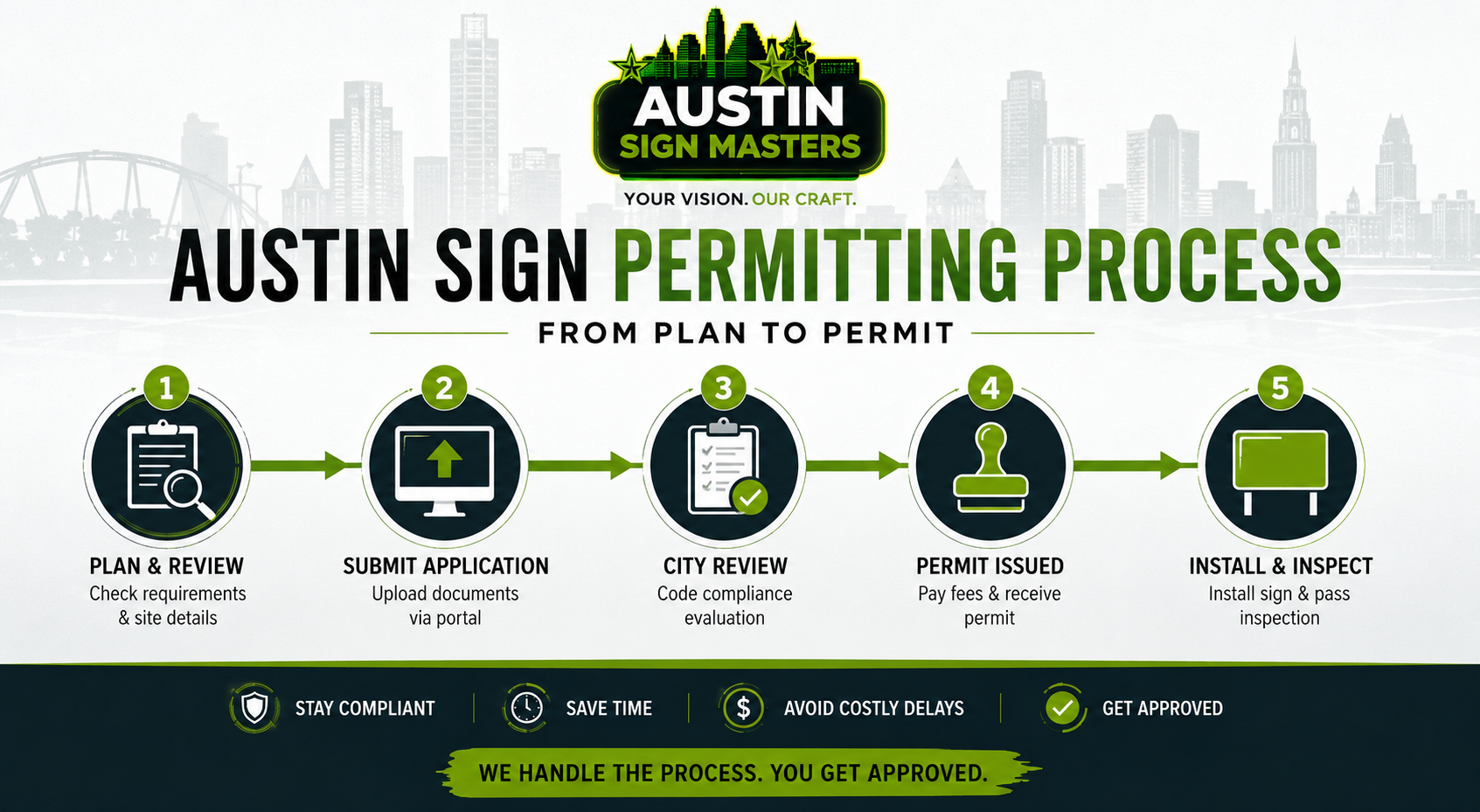
Austin sign regulations can shape almost every part of a commercial sign project before a designer ever chooses colors, materials, or lighting. If a business skips the code review, a great-looking sign can still be rejected because of size, height, placement, illumination, zoning, or permit requirements.
That is why city code knowledge matters before designing a sign in Austin. The right process protects your budget, prevents redesigns, and helps your sign move from concept to installation without avoidable delays.
Table of Contents
- Why Austin sign regulations matter
- Why Austin regulates business signs
- The biggest sign design mistake businesses make
- How sign districts affect your project
- 11 critical code checks before design
- Why Austin sign permits matter
- Hidden costs of ignoring city codes
- How a professional Austin sign company helps
- Frequently asked questions
Why Austin Sign Regulations Matter Before Design
Many business owners begin with a vision: bold channel letters, a monument sign near the road, a bright cabinet sign, or digital signage that changes with promotions. That design-first approach feels natural, but it can create problems if the proposed sign does not match the sign code Austin TX requirements for the property.
Austin sign regulations determine what can be built, where it can be installed, how large it can be, and whether it can be illuminated. A sign that works on one property may not be allowed a few blocks away if the sign district, zoning, frontage, or visibility conditions are different.
For official permitting guidance, the City of Austin explains that outdoor signage generally requires review through its Sign Permits process. The city code itself is published in the Austin Land Development Code Chapter 25-10.
Why Austin Regulates Business Signs
Austin does not regulate signs simply to make projects harder. The city uses sign rules to manage public safety, traffic visibility, neighborhood character, and visual clutter across a growing urban environment.
For businesses, signage is a marketing investment. For the city, signage is also part of the built environment that affects drivers, pedestrians, nearby properties, and commercial corridors. Understanding both perspectives helps owners create signs that are visible, brand-aligned, and permit-ready.
- Safety: Signs should not block sight lines or create hazardous distractions.
- Visibility: Signs should communicate clearly without overwhelming streetscapes.
- Consistency: Sign districts help match sign types to local property contexts.
- Durability: Structural and electrical requirements help protect people and property.
The Biggest Mistake Businesses Make
The most expensive mistake is designing or fabricating a sign before confirming what the location allows. A business may pay for branding concepts, renderings, engineering, or fabrication only to learn the sign exceeds permitted area, height, placement, or lighting rules.

A code-first approach does not limit creativity. It focuses creativity where it can succeed. Designers can still create an attractive sign, but they do it inside the rules that determine what the city can approve.
Every Austin Property Falls Within a Sign District
Austin sign regulations are not one-size-fits-all. Different properties fall into different sign districts, and those districts can affect sign area, sign height, illumination, freestanding signs, wall signs, and digital sign allowances.
A storefront in a dense commercial corridor may have different allowances than a business near a scenic roadway, a neighborhood edge, or an expressway-oriented property. This is why early site review matters. The property address, frontage, building layout, and sign district all influence the design path.
11 Critical Code Checks Before Designing Business Signs Austin Owners Can Approve
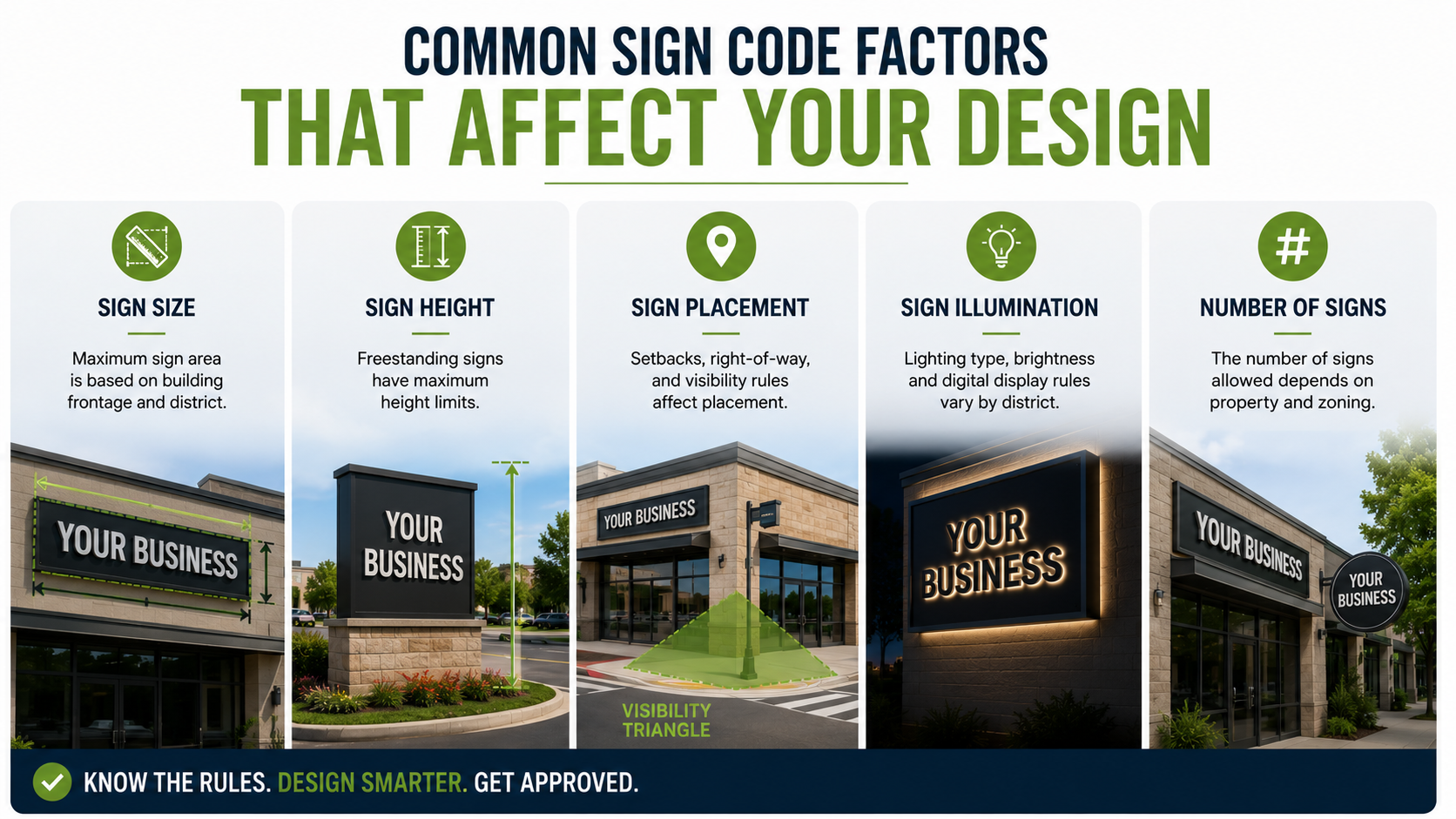
Before investing in business signs Austin customers will see from the street, review the factors that most often affect design and permitting.
1. Sign district
The sign district is the starting point. It can influence which sign types are allowed and how large or tall a sign can be.
2. Building frontage
Wall sign area is often connected to the size and configuration of the building frontage. Designers should confirm the available sign area before scaling a logo.
3. Sign size
Many owners assume a sign can be as large as the wall allows. In practice, Austin sign regulations may limit total sign area based on district and property conditions.
4. Sign height
Freestanding signs, monument signs, and pole signs may have height limits. These limits protect sight lines and neighborhood character.
5. Placement and setbacks
Signs may need to stay outside right-of-way areas, visibility triangles, easements, or setback zones. Incorrect placement can trigger redesign or relocation.
6. Illumination
Illuminated channel letters, LED signs, cabinet signs, and digital displays may require additional review. Lighting orientation and brightness can matter.
7. Structural requirements
Some signs require construction drawings or engineering review. This is especially relevant for freestanding, projecting, or roof-mounted signs.
8. Electrical work
Electrical signs may involve licensed electrical work and applicable state requirements. The Texas Department of Licensing and Regulation provides statewide electrician and electrical sign licensing information.
9. Landlord or property standards
A shopping center, office complex, or mixed-use property may have a sign criteria package that is stricter than city code.
10. Historic or special-area review
Certain locations may involve additional review because of overlays, historic context, or corridor standards.
11. Installation access
A compliant design still needs practical installation planning. Crews may need access for lifts, electrical connections, mounting points, and inspections.
Why Austin Sign Permits Matter
Most permanent storefront signs Austin businesses install require a permit before installation. This often includes channel letters, wall signs, monument signs, cabinet signs, projecting signs, and freestanding signs.
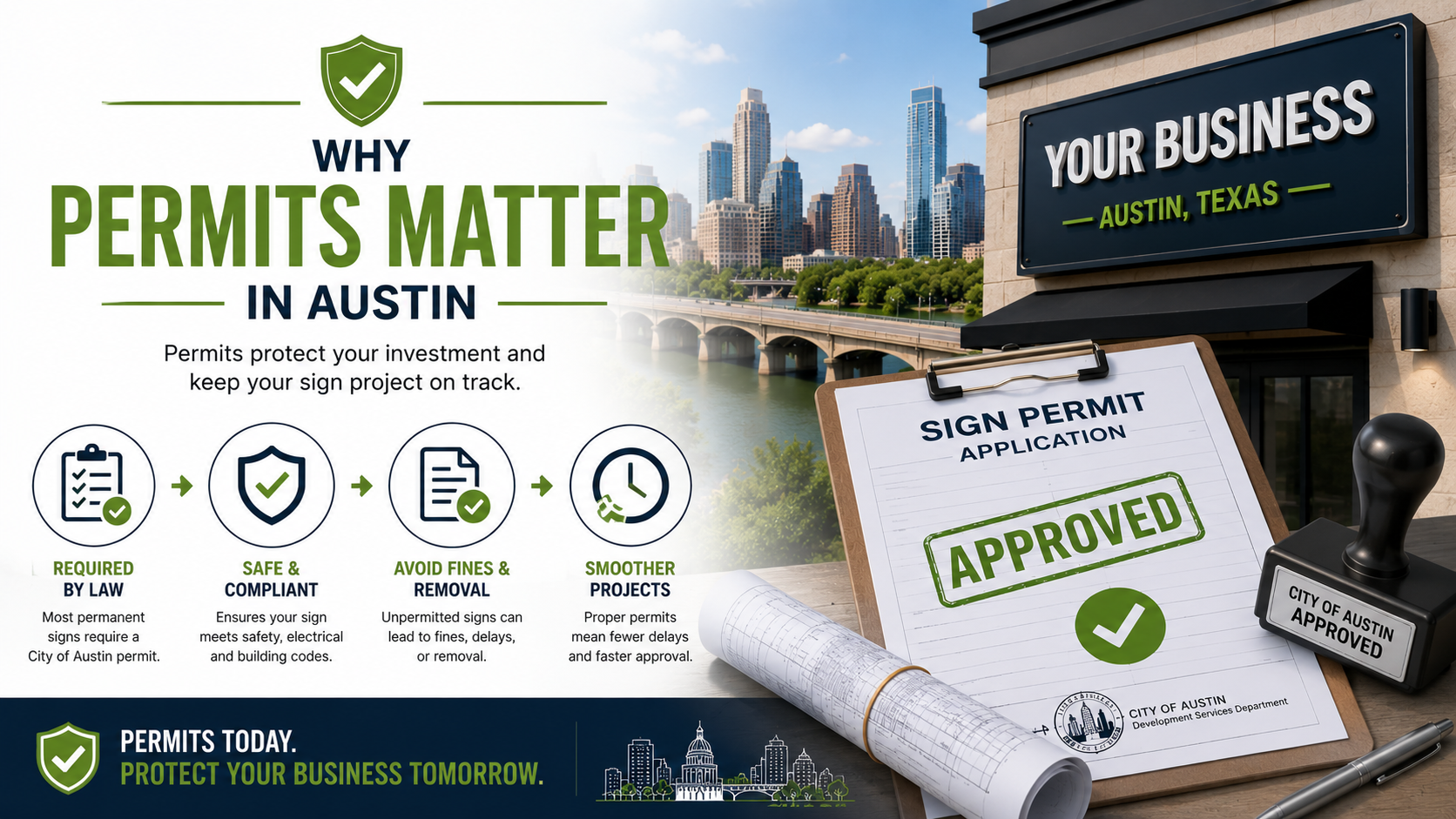
A sign permit Austin Texas review may look at dimensions, placement, structural details, electrical components, and compliance with the Land Development Code. The International Sign Association also notes that permit review commonly checks whether a sign is legal for the location; its permitting resources explain why code compliance should be addressed before installation.
Skipping permits can lead to enforcement problems, fines, removal requirements, and expensive delays. It can also create problems for future remodels, tenant changes, or property inspections.
Hidden Costs of Ignoring City Codes
Ignoring Austin sign regulations does not usually save time. It often shifts costs later in the project, when changes are more expensive.
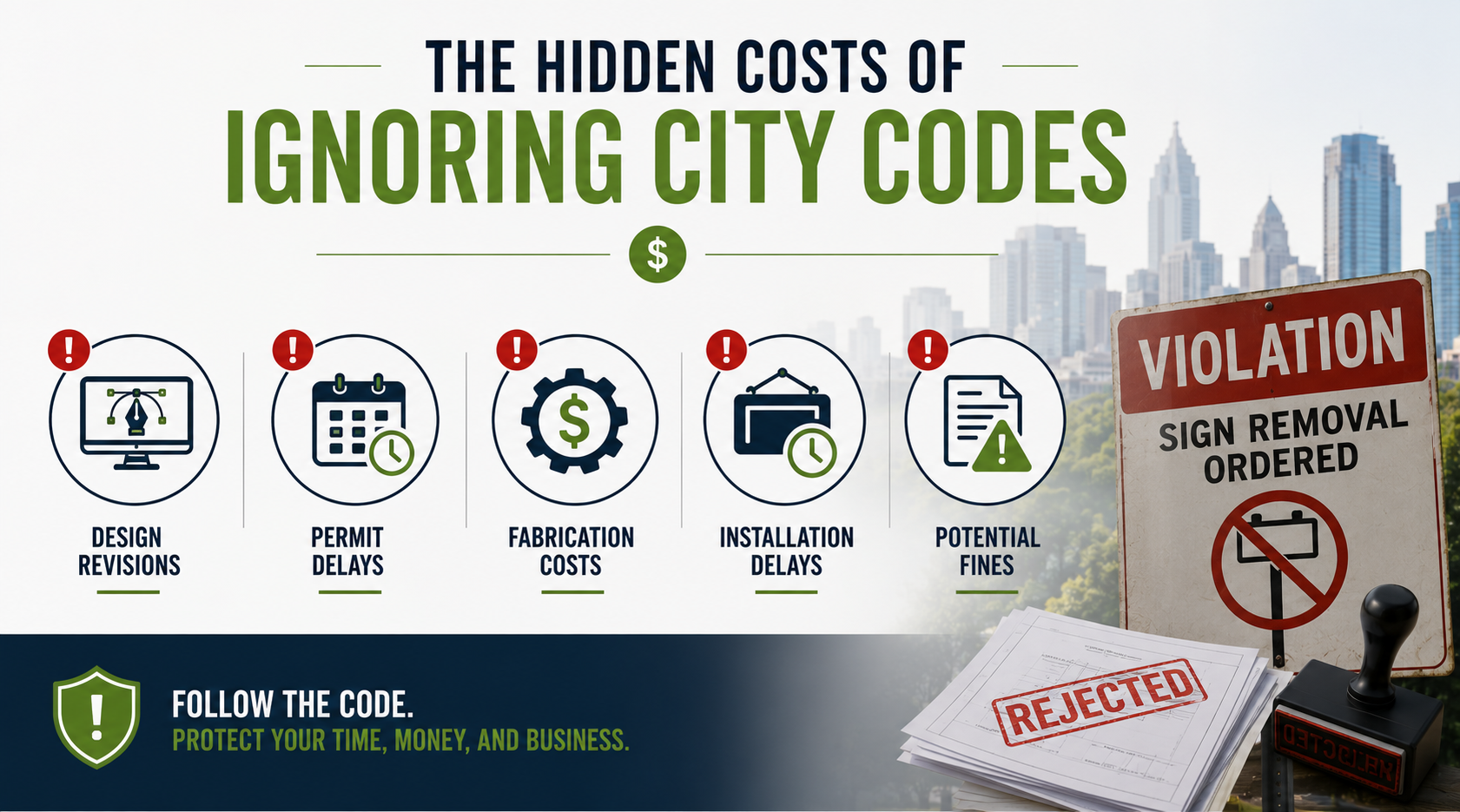
Plans may need to be resized, relocated, or simplified.
Non-compliant drawings can require extra review cycles.
Manufactured signs may need modification or replacement.
A sign delay can affect launch visibility and customer traffic.
How a Professional Austin Sign Company Helps
An experienced Austin sign company starts with the property, not just the artwork. That means reviewing sign district considerations, property restrictions, visibility needs, and permit requirements before recommending a final design.
Austin Sign Masters helps businesses plan commercial signage Austin projects from code review through design, fabrication, and installation. If you are comparing sign types, see our guide to restaurant signage Austin ideas for busy roads and our article on seasonal rebranding signage. You can also start from the Austin Signage Blog or contact the team through Austin Sign Masters.
The goal is not only to get a permit. The goal is to create a sign that is compliant, visible, durable, and aligned with the way customers actually approach the business.
Plan the Sign Before You Design the Sign
A strong code review helps you avoid wasted design time and gives your sign project a clearer path to approval.
Frequently Asked Questions About Austin Sign Regulations
Do all business signs require permits in Austin?
Most permanent commercial signs require review, although some exempt signs may not need approval. Always verify the exact requirements for the property before design begins.
What happens if I install a sign without a permit?
A business may face enforcement action, fines, permit complications, removal requirements, or delays when trying to correct the issue later.
How do I know which sign district applies to my property?
The city and permit review process can identify the applicable district and requirements. A sign company can also help review the property before design begins.
Can Austin sign regulations affect my logo size?
Yes. Sign area limits can affect the total sign size, which may influence logo scale, text layout, and the amount of negative space available.
Do illuminated signs have additional requirements?
Often yes. Electrical components, brightness, lighting direction, and installation details may require additional review depending on sign type and location.
When should I start the Austin sign permits process?
Start before final design and fabrication. Early planning reduces the risk of redesigns, wasted fabrication costs, and installation delays.